TKW Consulting


Building Cultural Connections…
The Building Cultural Connections curriculum was developed and approved by the State of Minnesota Department of Children, Families, and Learning. The program focuses on the importance of culture in the healthy social development of all children rather than focusing on one specific culture or ethnicity. The curriculum addresses many of the concepts that are common in working with children and families around differences in culture and ability. Building Cultural Connections (BCC) was developed specifically for childcare providers and staff; however, trainings are open to any person or group wanting to explore the importance of a healthy cultural development in every child. Trainings are delivered on an open registration basis or can be held at an agency for private group trainings. When needed, BCC will design a workshop for the specific needs of a childcare center, organization, agency, or business. The Building Cultural Connections initiative currently has over 50 certified trainers. These trainers come from across the state of Minnesota representing various cultural and professional backgrounds. Training Descriptions: Do as I Say, Not as I Do: Sending Children Positive Messages (BCC - Module A) 2 hours Look at the messages from adults that shaped your life as a child. How did they impact you and shape your culture? In this workshop participants will interactively explore the importance of childhood messages and the impact they have in the development of a healthy cultural identity. That’s the Way They All Are: How Stereotypes Affect Child Development (BCC - Module B) 2 hours Even if you do not have a diverse classroom, you will learn why an appreciation for diversity is an essential skill in order for children to succeed in a world full of differences. This interactive training will give you insight into attitudes and actions that you can use to teach children to appropriately handle the differences they encounter. Where did You Learn that Word: Countering Bias in the Classroom (BCC - Module C) 2 hours Ever wondered where children get those crazy ideas about differences? This training demonstrates how children become aware of differences that surround them and how they begin responding to them. Learn how you can help children develop healthy values about differences in culture, ability, and class. A Positive Environment Starts with Me: Self Evaluation and Positive Change (BCC - Module D) 2 hours If you are looking for practical skills and ideas for how to be more culturally competent in your childcare setting, this class is for you. You will learn how to assess your environment and activities, as well as gain some new ideas on communicating with children about differences. Investing in the Future: How to Positively Teach Children about a World Full of Differences 6 hours All four workshops combined into an in-depth training focusing on developing a positive learning environment in the classroom.Developing Your Family Child Care Business…
Developing Your Family Child Care Business™ Developing Your Family Child Care Business™ is an 8-module, facilitator-led interactive learning process for individuals wanting to launch and grow successful family child care businesses. The program, available in English or Spanish, covers topics that help participants think and act as business owners. Participants create a clear blueprint for building sustainable businesses that serve the needs of the parents and children as well as the community. The program includes a Participant Manual that is divided into modules that can easily accommodate the varying scheduling and content needs of providers. The Manual walks providers through a step-by-step process for establishing or improving their business. In partnership with First Step Fund, the Francis Institute was instrumental in the development of the program and has assisted in delivering the program since its inception in 1996. Currently 149 sites are certified to teach Developing Your Family Child Care Business™ Over 1,800 individuals participated in this comprehensive training program last year. Developing Your Family Child Care Business Program Outline Module 1: Exploring Business Ownership • Distinguish among the roles played by a family child care business owner. • Write and evaluate a business concept statement. Module 2: Managing & Organizing My Child Care Business • Identify critical personnel and resource team solutions. • Choose an appropriate legal structure. Module 3: Defining My Family Child Care Services • Identify family child care business features and benefits. • Determine governmental and professional licensing requirements. Module 4: Analyzing the Family Child Care Business Market • Profile the local child care industry and identify trends. • Define target market. • Determine the business's direct, indirect, and future competition and its distinctive services. Module 5: Promoting My Family Child Care Business • Identify market advantages/disadvantages related to the business location. • Develop promotional strategies. • Begin the process of pricing services. Module 6: Keeping Track of Finances • Identify costs associated with running a family child care business. • Learn to use basic accounting tools such as cash flow statement, income statement, and balance sheet. • Project income based on pricing. Module 7: Operating My Family Child Care Business • Set policies for operating the child care business. • Consider entrepreneurial oversight to improve the business. • Complete the Business Plan and Parent Handbook. Module 8: Celebrating My Accomplishments! • Graduation. • Presentation of Executive SummaryDollars & Sense…
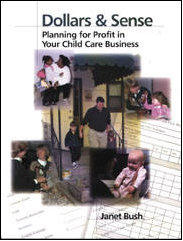
Family child care is a business and as such, needs to be founded and operated on sound business practices. Dollar & Sense will give you the beginnings of how to operate your child care like a professional business. If you are a child care provider and business is not in your background, how will you make a success of your small business and earn a livable wage? Now, there's a training curriculum designed just for you. It's called Dollars & Sense: Planning for Profit in Your Child Care Business. The course takes traditional business skills and packages them for the very non-traditional business of child care -- the business of caring. "This training is not simply a collection of new provider skills. It teaches a new attitude about the self- determined professionalism and compensation of child care providers." -- Janet Bush, author of Dollars and Sense Developed by Janet Bush and the Montana Child Care Resource & Referral Network and the Montana Community Development Center, this course is based on the expertise of "local child care industry leaders -- providers who have demonstrated quality care, longevity, and experience in the field and had an admirable profitability." Find out what these leaders know and practice, from creating and using policies to setting fees and collecting payments. Most importantly, Bush shares what being a successful child care provider is really all about -- perceiving oneself as a professional, an advocate for the profession, and an informal mentor of new providers. Included in the Dollars & Sense Training Curriculum are: • A Child Care Provider Bill of Rights • Six different communication lessons: Eliminate Guilt, Sharing Unpleasant News with a Parent, Communication Styles, and more • Business lessons on Rates, Fees and Collection; Record-Keeping and Cash Flow; and Marketing Strategies • Child care business plan • Sample business forms and documents. • Dollars & Sense is a series of business skills and assertive communication classes that consists of 12 separate one hour trainings. These trainings are most effective if taken as a complete series, but we can make arrangements to provide any individual sessions that may interest you the most. Sessions: Child Care Provider Bill of Rights Child care providers are professionals, and are entitled to good working conditions and worker status. Objectives: • To discuss the difficulties that providers may face in being perceived as professionals. • To discuss the family child care program as a business. • To discuss provider rights and responsibilities. Contracts and Policies Objectives: • To show how contracts should clarify provider & parent expectations. • To discuss how business policies should maximize profitability. • To learn how to write a proper contact and policy statement. Eliminate Guilt Objectives: • To learn that feelings of guilt have little productive value for your child care business. • To learn the importance and implementation of setting professional boundaries. • To discuss respect and healthy relationships. Rates, Fees, and Collection Objectives: • To learn how pricing is a science and an art. • To learn how to research the local market, consider expenses, and set income goals before you choose your rates, fees, and collection practices. • To discuss payment schedules, supplemental fees, and other income considerations. • To learn how to handle pricing objections. Passive, Aggressive, and Assertive Objectives: • To learn a communication style to enhance productive outcomes for your business. • To learn the differences and similarities in passive, aggressive, and assertive styles of communication. • To discuss stereotypes in communication styles. An Effective Record Keeping System Objectives: • To discuss the importance and advantages of a separate checking account for your business. • To learn how to implement a monthly business income and expense ledger. • To learn about record keeping and business riling systems. • To discuss what records need to be kept and for how long. Listening Skills Objectives: • To learn about active listening skills and how they can lead to problem solving. • To learn the techniques of proper response, paraphrasing, and detachment. • To learn how to listen respectfully and deal with criticism. Cash In, Cash Out - Where Do You Stand? Objectives: • To learn to create a cash flow plan for your business and the advantages of its use. • To learn about annual income statements and balance sheets. Sharing Unpleasant Information With Parents Objectives: • To learn how to share unpleasant or critical information in a respectful and supportive manner. • To discuss the BEAD formula for offering constructive criticism. Marketing Strategies Objectives: • To learn how to research local market to identify special features and offerings of your business. • To learn how to objectively look at your facility and program. • To discuss how to identify and target potential customers. • To learn the proper steps to an effective marketing plan. • To learn how to analyze and compare to competition. • To discuss specific marketing techniques and the advantages and disadvantages of each. Responsibilities of an Assertive Provider Objectives: • To promote a clear understanding of provider rights and professional responsibilities. • To learn about good parent-provider relationships and communication. A Professional Business Plan Objectives: • To learn how to put together an overall business plan. • To learn to present business practices and profitability in applying for loans and grants.
Promoting Quality Child Care.
Copyright © 2005-2022 TKW Consulting
all rights reserved
Website design and maintenance by Kandi Technologies